The $100 Bill Paradox: More Cash in a Cashless World
It is one of the more counterintuitive data points in modern macroeconomics. As digital payments have displaced cash in everyday commerce — from contactless cards to mobile wallets — the total stock of physical US currency in circulation has continued to expand. Roughly 80% of all US dollar bills in circulation by value are $100 notes, and a significant proportion of those are estimated to reside outside the United States entirely.
This week, Bloomberg's Odd Lots podcast brought renewed attention to the structural dynamics behind this phenomenon, speaking with Oliver Bullough, whose reporting on offshore finance and kleptocracy has made him one of the most authoritative voices on illicit capital flows. The core thesis — that much of this cash is held by criminal enterprises, cartels, and corrupt state actors who prize the dollar's global acceptance — is hardly new. But the market implications of sustained dollar demand from shadow economies deserve serious analytical attention.
What This Means for the US Dollar and Global Macro
Structural Dollar Demand From Illicit Flows
The dollar's status as the world's reserve currency is reinforced not only by US Treasury markets and Federal Reserve credibility, but also by its unmatched utility as a store of value in economies with weak institutions. Cartels, sanctioned regimes, and informal traders across Latin America, Southeast Asia, and sub-Saharan Africa absorb hundreds of billions of dollars in physical currency annually. This creates a persistent, price-inelastic bid for the greenback that exists entirely outside the formal financial system.
For macro strategists, this matters because it provides a structural floor to dollar demand that is not captured in conventional models of trade balances or capital flows. Even as the Federal Reserve's rate cycle evolves and US fiscal deficits widen, the dollar's shadow-economy utility functions as a silent anchor.
The Petrodollar Parallel and Geopolitical Risk
There is a parallel here to the petrodollar system: just as oil-exporting nations historically recycled dollar revenues into US Treasuries, illicit actors recycle dollar cash into real assets, property, and financial instruments through layering and integration. This process, Bullough argues in his book, has become systematically embedded in global finance — with enablers ranging from shell companies to luxury real estate markets. The macro risk is that any serious disruption to dollar hegemony — whether through BRICS currency initiatives or expanded sanctions evasion infrastructure — could unwind some of this latent demand.
Gold and Bitcoin: The Alternative Store-of-Value Trade
Gold's Enduring Appeal in an Uncertain Week
Against this backdrop, gold enters the week of September 7, 2026 with considerable analytical interest. According to current market commentary, gold prices are being watched closely for directional cues, with macro uncertainty and currency dynamics among the key drivers cited by analysts. The metal's role as a hedge against both dollar debasement and geopolitical instability keeps it structurally relevant in any serious discussion of shadow capital flows.
The connection is not merely theoretical. When trust in formal financial systems erodes — whether through inflation, sanctions, or sovereign default risk — physical stores of value, including gold and large-denomination currency, tend to attract incremental demand. DANA's analytics platform tracks institutional positioning across gold-linked equities and ETFs, with FLUX monitoring ETF capital flows and ROSA ROSA scanning hedge fund 13F filings for shifts in commodity exposure.
The dollar's dominance in illicit finance is, paradoxically, one of its most durable sources of global demand — a structural bid that conventional currency models consistently underestimate.
Bitcoin's Golden Cross: Signal or Noise?
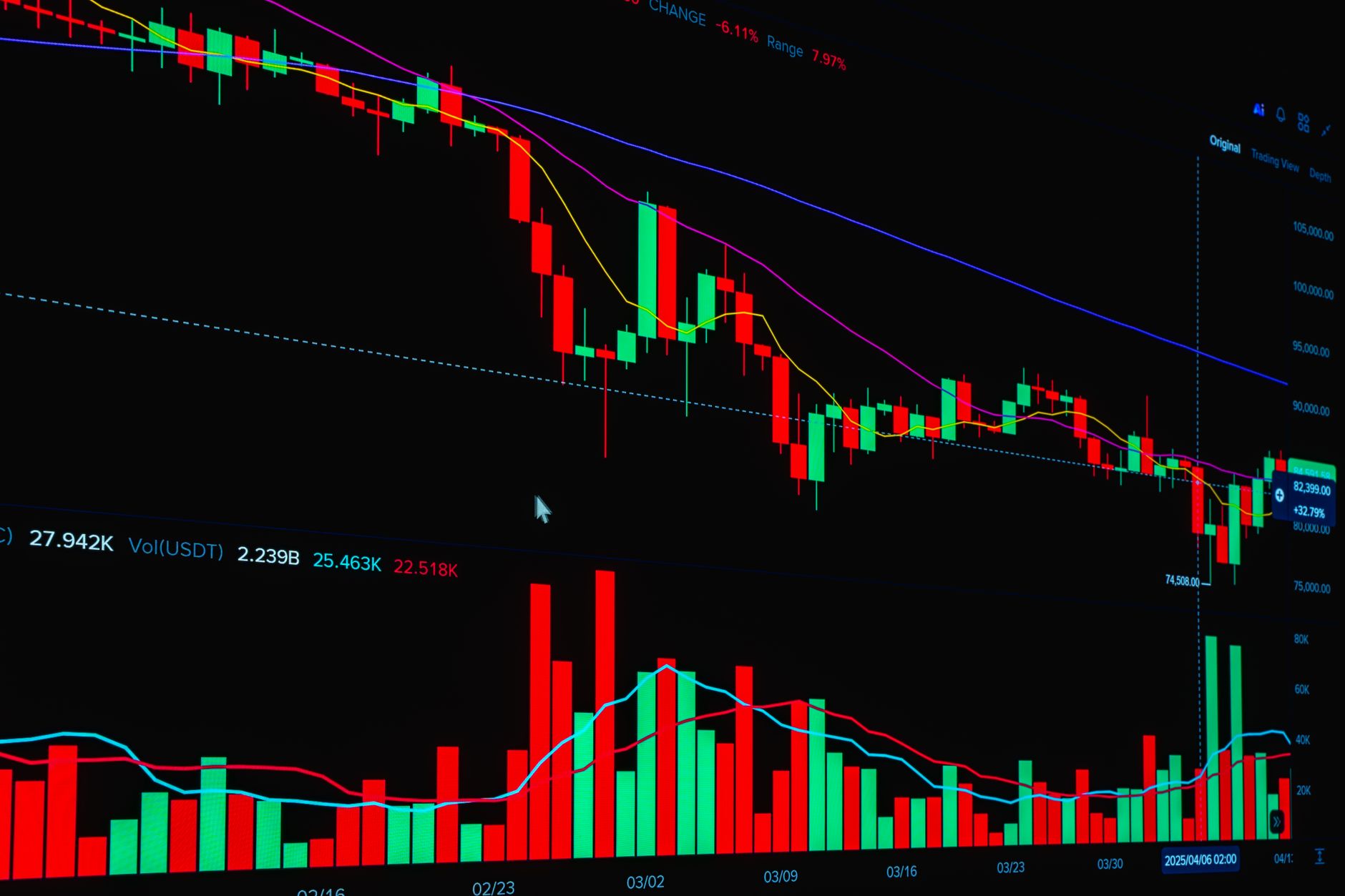
The crypto market is generating its own technically significant event this week. According to analysis from Finance Magnates, Bitcoin is approaching a golden cross formation — a technical pattern where the 50-day moving average crosses above the 200-day moving average, historically associated with bullish momentum. However, analysts note that the $84,400 level continues to act as meaningful overhead resistance, capping near-term upside toward the psychologically significant $100,000 target.
The money-laundering narrative and Bitcoin's trajectory are not unrelated. One of the persistent regulatory risks overhanging digital assets is the perception — and documented reality in certain cases — that crypto rails can facilitate illicit flows. Tightening AML enforcement globally could act as a headwind for unregulated crypto channels even as institutional adoption of regulated Bitcoin instruments accelerates.
DANA's 21-agent AI council currently carries no active BUY or SELL signals on Bitcoin-linked equities or macro-sensitive names. The council's 12-of-17 weighted vote threshold — a 70.6% supermajority — means signals are issued selectively, only when cross-agent consensus is genuinely robust. In a week defined by macro complexity rather than clean directional catalysts, that discipline is precisely the point.
Broader Market Implications: What to Watch This Week
- Dollar Index (DXY): Shadow-economy demand provides structural support, but watch for any escalation in de-dollarisation rhetoric from major emerging-market blocs.
- Gold spot price: Analysts are tracking the metal's trajectory into the week of September 7 — any breach of key resistance levels would attract momentum-driven flows.
- Bitcoin technical levels: The $84,400 resistance zone is the near-term focal point; a sustained break higher would meaningfully change the technical picture heading toward $100K.
- Financial sector regulatory risk: Ongoing enforcement actions related to AML compliance continue to create event-driven risk for certain financial intermediaries.
For a deeper look at how DANA's specialist agents — including SCRIBE, which monitors SEC corporate filings, and FARAH, which covers earnings dynamics — are assessing macro-sensitive equities, visit the strategy guide.
Take Action
The intersection of shadow capital flows, dollar dominance, and alternative asset narratives is one of the more structurally significant — and underanalysed — dynamics in macro markets today. DANA's AI council monitors 230 US equities across momentum, institutional flows, ETF capital movements, and corporate filings to identify moments of genuine, high-conviction signal. With no active BUY or SELL signals issued today, the council's current posture reflects the complexity of the environment — not every week offers clean alpha. Explore DANA's live signals and analytics dashboard to see how multi-agent analysis approaches markets when the macro picture is this nuanced. All signals and analysis provided by DANA are general information and educational in nature, and do not constitute personal financial advice.
General information only — not financial advice. This article is educational content produced by DANA and does not take into account your objectives, financial situation or needs. It is not a recommendation to buy, sell or hold any financial product. Any signals mentioned are the educational output of an automated model, not personal advice. Do your own research and consider seeking licensed financial advice before acting. Past performance is not a reliable indicator of future results. Capital at risk.



Leave a Comment
Share your thoughts. All comments are reviewed for quality.